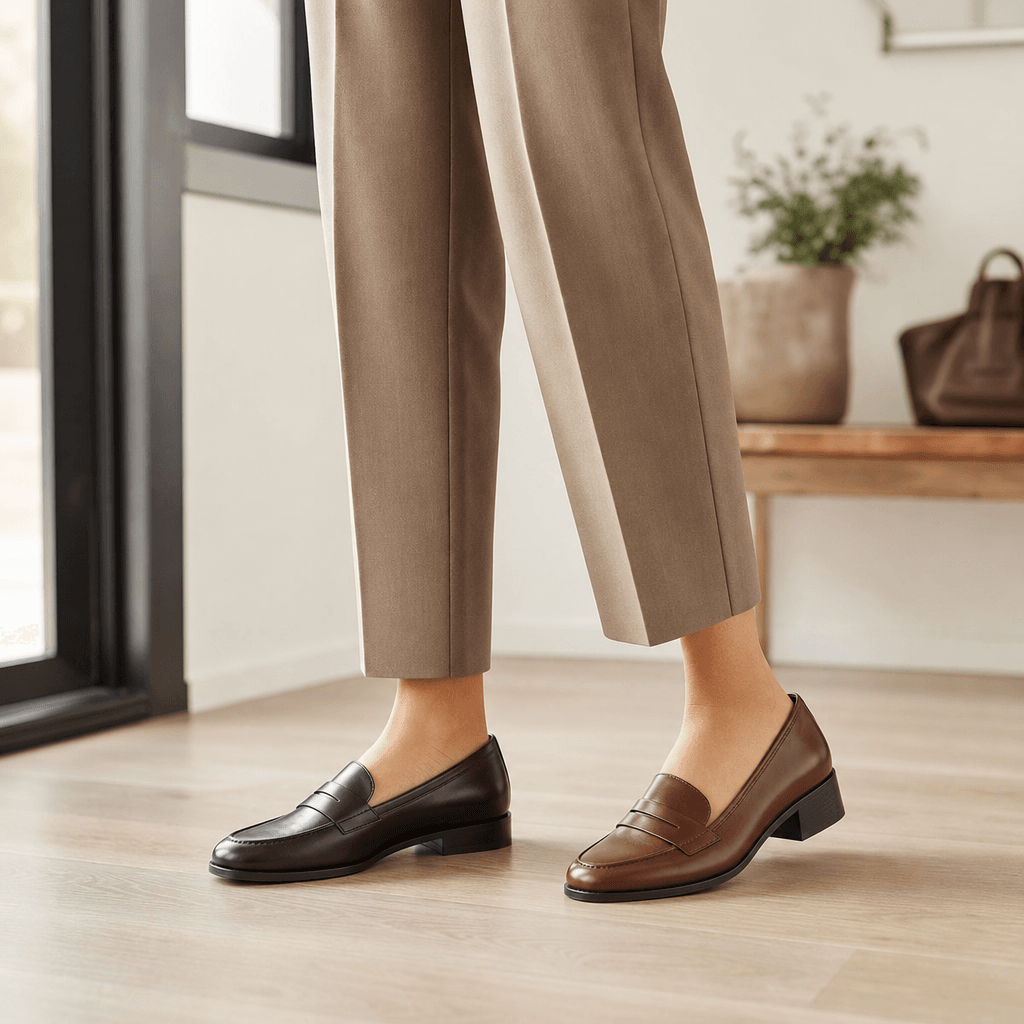
Work shoes are where style plans often fail by 3 p.m. A sharp outfit cannot rescue blistered heels or collapsing arches. The aim is not to pretend pain equals professionalism. The aim is to find shoes that look appropriate for your workplace and remain wearable through a full day of commuting, standing, and walking between meetings.
This guide covers fit checks, style types that balance polish and comfort, break-in strategy, and rotation habits that keep pairs lasting longer.
Start With Fit, Not the Photo
Comfort begins at the fitting stage:
- Try shoes later in the day when feet are slightly larger
- Check toe room while standing—toes should not jam forward
- Heel should stay reasonably secure without brutal rubbing
- Walk on a hard surface, not only carpet
- Notice pressure points immediately; hope is not a break-in plan for sharp pain
If your workplace dress code allows it, consider brands and lasts that match your foot shape rather than forcing a trendy silhouette that fights your anatomy.
Choose Heel Height You Can Repeat Four Days a Week
A shoe you can wear once for an event is not a work shoe. Pick a heel height—or a flat—you can repeat. Many people do well with:
- Supportive flats with real structure
- Low block heels that do not pitch the foot aggressively
- Clean leather sneakers where culture allows
- Loafers with cushioned insoles
Sky-high styles can stay for occasional days. Daily shoes need sustainable geometry.
Match the Shoe to the Dress Code Honestly
Polish is relative to context:
- Formal offices: leather oxfords, refined loafers, classic pumps with wearable heels
- Business casual: loafers, sleek boots, minimal leather sneakers, low block heels
- Creative or startup: cleaner sneaker and boot options, still intentional and maintained
A shoe can be comfortable and still wrong for the room. Read the culture, then optimize comfort inside that lane.
Look for Hidden Comfort Features
Useful features do not have to look orthopedic:
- Cushioned or replaceable insoles
- Flexible forefoot with stable heel counter
- Breathable leather or quality synthetics that do not cook your feet
- Treads you can trust on wet sidewalks and office floors
You can often add aftermarket insoles to an otherwise good pair. You cannot easily fix a stiff last that is the wrong shape for your foot.
Break In With a Plan
New shoes need graduated wear:
- Short indoor wears first
- Commute-length tests before all-day commitments
- Blister prevention—socks that match the shoe, protective stickers where you know you rub
- Alternate pairs across the week so materials recover
Never debut a brand-new pair on your longest standing day if you can avoid it.
Keep Them Looking Polished
Comfort shoes lose authority when they look neglected:
- Wipe leather regularly; condition when dry
- Replace worn heel caps before they scrape unevenly
- Clean sneakers instead of pretending gray stripes are a style choice
- Store with shape support when possible
Maintenance is part of the polished look—and part of longevity.
Build a Small Rotation
Two or three work pairs beat one martyr pair. Rotation reduces odor, compression fatigue, and visible wear. A practical set might be one formal option, one business-casual daily, and one weather-ready backup.
Closing: Comfort Is Part of Looking Capable
Polished work style includes the ability to move through your day without limping. Prioritize fit and repeatable heel height, choose silhouettes that match your workplace, break shoes in gradually, and rotate pairs.
Next time you shop, test walk on hard floors and ask whether you would willingly wear the pair four days in a row. If the answer is no, it is not a work shoe—no matter how good it looks in the box.