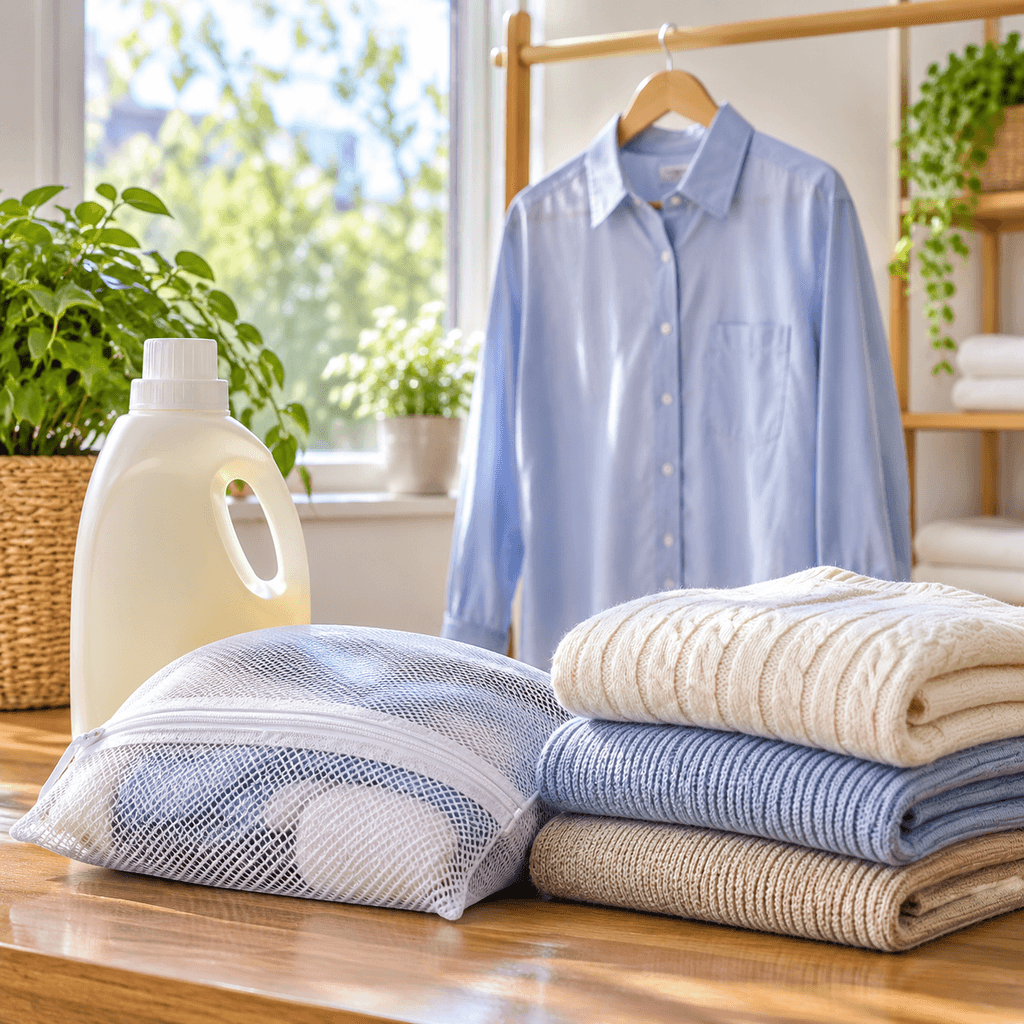
A strong wardrobe is not only what you buy. It is also what you keep wearable. Everyday pieces lose shape, color, and polish from habits that feel harmless: hot washes, crowded hangers, skipping a two-minute repair, stuffing knitwear into sharp hooks. Clothing care sounds fussy until you notice how often you replace basics that could have lasted another season.
This guide keeps care practical. No museum-level garment ritual—just a short set of habits that protect fit, fabric, and finish so your regular rotation stays ready to wear.
Why Care Matters More Than Constant Restocking
Replacing a stretched tee or faded black sweater is normal over time. Replacing them twice as fast because of rough washing is avoidable. Better care protects:
- Shape: Waistbands, shoulders, and knits that still sit where they should
- Color: Dark denim, black tops, and saturated accents that stay richer
- Surface: Fewer pills, snags, and shine marks from friction
- Budget: Money that can go toward one better piece instead of repeat replacements
Care also supports a calmer closet. When pieces look finished, getting dressed takes less negotiation.
Habit 1: Wash Less Often Than You Think
Not every wear needs a wash. Overwashing breaks fibers and fades dye.
- Jeans and structured trousers: Air out between wears; wash when dirty or odorous
- Sweaters: Spot clean and rest; wash sparingly in cool water
- Shirts and tees: Wash when needed, but skip the default hot cycle
- Outerwear: Brush off dust and spot clean; full washes are rare events
If something smells fine and looks fine, hanging it to air overnight is often enough.
Habit 2: Choose Gentler Machine Settings by Default
When you do wash, default to kinder settings:
- Cold or cool water for most everyday clothes
- Shorter cycles for lightly worn items
- Mild detergent measured correctly—more soap is not cleaner
- Mesh bags for bras, delicates, and anything with straps or hardware
- Turn darks and prints inside out to reduce surface abrasion
Separate lint producers (fleece, new towels) from pieces you want to keep smooth. A five-minute sort prevents a sweater full of fuzz.
Habit 3: Rethink Heat in the Dryer
Heat is convenient and hard on clothes. Wherever possible:
- Air-dry knits flat so they do not stretch on a hanger
- Hang shirts while damp and smooth the seams with your hands
- Use low heat only when you must machine-dry
- Remove pieces while slightly damp to cut wrinkles without scorching
If you like the soft finish of dryer cycles, shorter time plus immediate hanging beats cooking fabrics on high.
Habit 4: Store So Pieces Keep Their Shape
Storage mistakes quietly ruin good buys.
- Fold heavy knits instead of hanging them
- Use hangers that support shoulder shape; avoid wire hangers that leave dents
- Give garments a little space—crushed clothes crease and wear at friction points
- Button the top button or fasten hooks before hanging so pieces stay aligned
- Keep like with like so you actually see what you own and stop overbuying duplicates
Cedar blocks or lavender sachets can help with freshness; they are optional. Space and shape support are not.
Habit 5: Fix Small Problems Before They Grow
A loose button, tiny seam split, or early pill cluster is a five-minute job. Left alone, it becomes a reason to exile the piece to the back of the closet.
Keep a tiny kit:
- Needle, thread in navy/black/white, spare buttons
- Fabric shaver or sweater stone for pills
- Stain stick for quick treatment
- Lint roller for mornings
You do not need to become a tailor. You need to catch issues while they are still small.
Habit 6: Rotate and Rest What You Wear Most
Favorite pieces fail first because they never rest. Build a soft rotation:
- Alternate two everyday pairs of work trousers instead of living in one
- Let shoes dry fully between wears
- Give jeans a day off on a hanger or hook after a long day
Rotation spreads wear across the wardrobe and keeps the “best” item from aging twice as fast.
A Weekly Care Loop That Stays Realistic
Aim for maintenance you can keep on a Sunday evening or weekday night:
- Return clean clothes to their place—folded or hung correctly
- Spot anything that needs a button, stain treat, or shave
- Start one gentle load if needed; avoid saving a mountain for a frantic night
- Set shoes and bags back where they belong so mornings stay easy
Consistency beats occasional deep-cleaning marathons.
Closing: Care Is Part of Style
Style reads as intentional when clothes look cared for—clean lines, true color, intact details. That finish rarely comes from buying more. It comes from washing less harshly, storing with shape in mind, and fixing small damage early.
Pick two habits this week: cooler washes and folding your knits. Add a mini repair kit next week. Over a season, those quiet choices keep your everyday pieces looking like they belong in the rotation—because they still do.