Daftar isi: [Hide]
- 1The AI Revolution Is Creating a New Business Risk Landscape
- 2Why AI Risk Management Matters More Than Ever
- 3What Is AI Risk Management?
- 4The Biggest AI Risks Facing Businesses in 2026
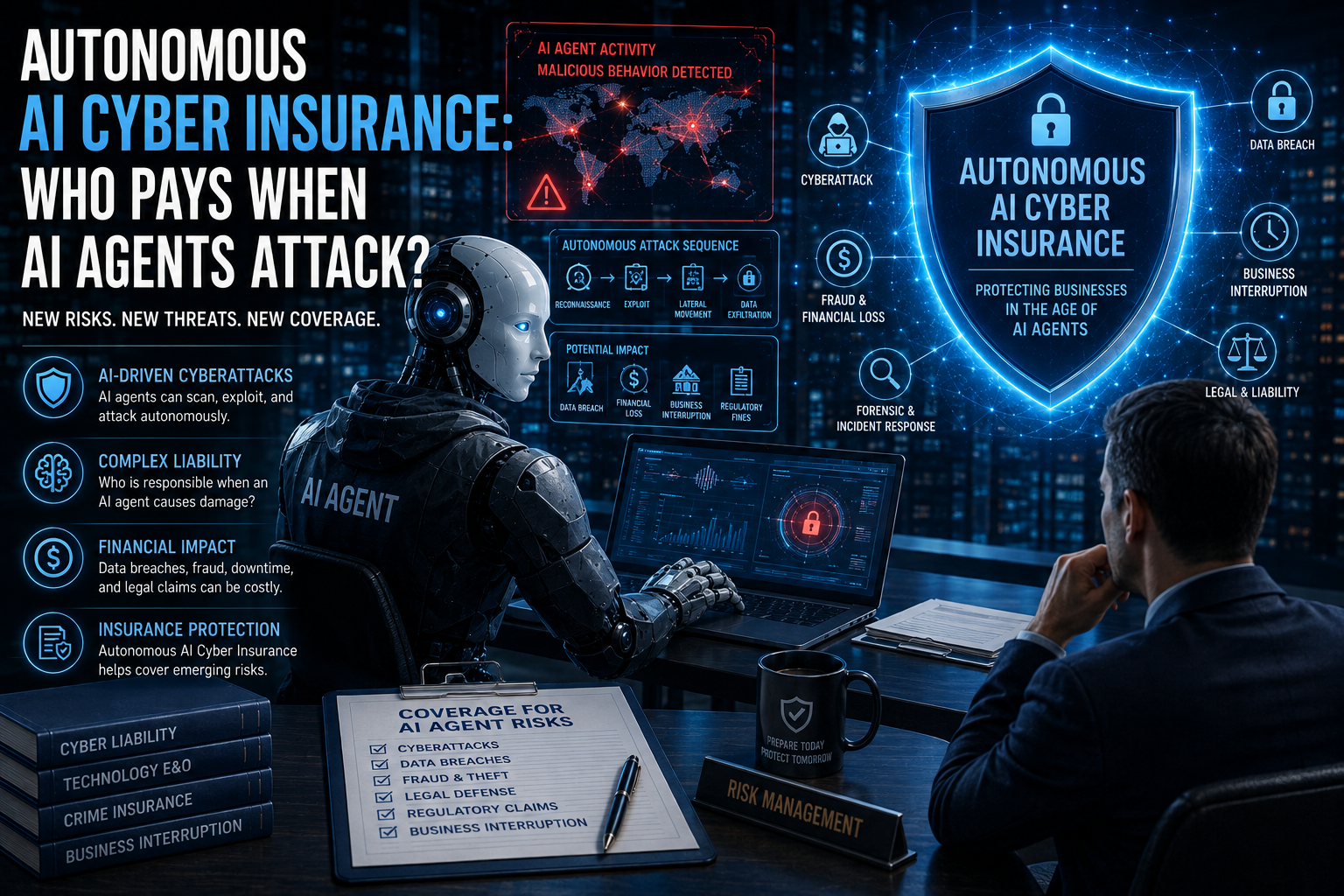
- 5Understanding AI Insurance Coverage
- 6Why Traditional Insurance May Not Be Enough
- 7The Rise of AI Liability Insurance
- 8How Insurers Evaluate AI Risk
- 8.14AI Governance
- 8.15Human Oversight
- 8.16Security Controls
- 8.17Documentation
- 9Best Practices for AI Risk Management
- 10Industries Facing the Highest AI Risk
- 10.24Healthcare
- 10.25Financial Services
- 10.26Legal Services
- 10.27Technology Companies
- 10.28Manufacturing
- 10.29Retail and E-Commerce
- 11The Future of AI Insurance
- 12Frequently Asked Questions
- 13📌 The password is in the YouTube video : @AERLAN (LINK RESMI PART 1) JOIN NOW ✅

The AI Revolution Is Creating a New Business Risk Landscape
Artificial intelligence is no longer a future technology. In 2026, AI has become deeply integrated into business operations, from customer service and marketing automation to underwriting, financial forecasting, healthcare diagnostics, and software development.
Recent industry reports show that AI is now among the highest strategic investment priorities for business leaders and insurance executives worldwide. However, the rapid adoption of AI is creating new forms of risk that traditional insurance policies were never designed to address.
As businesses increasingly depend on AI systems, executives are asking a critical question:
Who pays when AI makes a costly mistake?
The answer is becoming more complex every year.
This is where AI risk management and AI insurance coverage enter the conversation.
Why AI Risk Management Matters More Than Ever
Every technology introduces risk.
The difference with AI is that many systems can make autonomous decisions, generate content, analyze data, and influence business outcomes without direct human intervention.
New AI-related risks include:
- AI hallucinations
- Automated decision errors
- Intellectual property violations
- Deepfake fraud
- Regulatory compliance violations
- Bias and discrimination claims
- Privacy breaches
- Cybersecurity vulnerabilities
- Operational disruptions
Experts increasingly warn that AI-related legal and financial claims are expected to grow rapidly throughout 2026 and beyond. Dedicated AI insurance products are emerging because traditional policies often fail to address these new exposures.
What Is AI Risk Management?
AI risk management refers to the framework businesses use to identify, assess, monitor, and reduce risks associated with artificial intelligence systems.
A comprehensive AI risk management strategy typically includes:
Governance Controls
Organizations must establish clear ownership and accountability for AI systems.
Questions include:
- Who approves AI deployment?
- Who monitors performance?
- Who handles incidents?
Risk Assessment
Before deploying AI, businesses should evaluate:
- Data quality
- Security vulnerabilities
- Legal implications
- Regulatory requirements
- Ethical considerations
Continuous Monitoring
AI models can change behavior over time.
This phenomenon, often called model drift, requires ongoing oversight and performance evaluation.
Incident Response Planning
Businesses need documented procedures for handling:
- AI failures
- Data leaks
- Compliance issues
- Customer complaints
The Biggest AI Risks Facing Businesses in 2026
1. AI Hallucinations
One of the most widely discussed AI risks involves hallucinations.
These occur when AI systems generate inaccurate information while presenting it as factual.
Potential consequences include:
- Financial losses
- Customer misinformation
- Contract disputes
- Reputational damage
Many organizations now require human review processes for critical AI-generated outputs.
2. AI-Powered Cyberattacks
Cybercriminals are increasingly using AI to create sophisticated attacks.
Research indicates AI-generated phishing campaigns achieve significantly higher success rates than traditional phishing attempts.
Common threats include:
- Deepfake impersonation
- Automated social engineering
- Credential theft
- AI-enhanced malware
These threats have dramatically increased cyber insurance concerns.
3. Intellectual Property Violations
Generative AI can create content that unintentionally infringes on copyrighted material.
Businesses using AI-generated content may face:
- Copyright disputes
- Trademark claims
- Licensing conflicts
This is becoming one of the fastest-growing areas of AI liability.
4. Regulatory Compliance Risk
Governments worldwide continue introducing AI regulations.
Businesses operating internationally face complex compliance obligations regarding:
- Data privacy
- Transparency
- Accountability
- Consumer protection
Failure to comply can result in significant penalties.
5. Deepfake Fraud
Deepfake technology has evolved rapidly.
Companies now face risks involving:
- Executive impersonation
- Fake video messages
- Voice cloning scams
- Reputation attacks
Insurance providers increasingly recognize deepfake incidents as a serious business risk.
Understanding AI Insurance Coverage
Traditional business insurance often leaves gaps when AI-related incidents occur.
To address this problem, insurers are developing specialized AI insurance products.
These policies may cover:
AI Liability Claims
Coverage for lawsuits arising from:
- AI decision errors
- Discrimination claims
- Negligence allegations
- Professional mistakes
Cyber Incidents
Protection against:
- AI-enabled cyberattacks
- Data breaches
- Ransomware events
- Business interruption
Intellectual Property Claims
Coverage related to:
- Copyright disputes
- Trademark violations
- Content ownership conflicts
Crisis Management
Support for:
- Public relations efforts
- Legal defense
- Incident investigation
- Regulatory response
As AI adoption accelerates, insurers are increasingly offering affirmative AI coverage rather than relying solely on traditional policies.
Why Traditional Insurance May Not Be Enough
Many businesses assume existing policies already cover AI-related losses.
That assumption can be dangerous.
Several insurers have begun introducing AI exclusions to limit exposure to emerging AI-related claims. Some carriers are narrowing coverage while specialized insurers are developing dedicated AI products.
This creates potential coverage gaps involving:
- AI-generated recommendations
- Autonomous decisions
- Deepfake incidents
- Algorithmic failures
- AI-related intellectual property disputes
Businesses should carefully review policy wording before assuming coverage exists.
The Rise of AI Liability Insurance
AI liability insurance has become one of the fastest-growing segments within commercial insurance.
The purpose is simple:
Protect businesses from financial losses caused by AI system failures.
Potential covered scenarios include:
- AI chatbot providing incorrect advice
- Automated underwriting errors
- Biased hiring algorithms
- AI-generated legal mistakes
- Faulty predictive analytics
Industry analysts expect demand for AI liability insurance to continue growing rapidly as AI adoption expands.
How Insurers Evaluate AI Risk
Insurance companies increasingly assess AI maturity before issuing coverage.
Key underwriting factors include:
AI Governance
Strong governance structures can reduce premiums.
Human Oversight
Businesses maintaining human review processes are often viewed as lower risk.
Security Controls
Insurers evaluate:
- Access controls
- Encryption
- Monitoring systems
- Authentication protocols
Documentation
Organizations must demonstrate:
- Risk assessments
- Compliance procedures
- Incident response plans
Experts predict insurers will increasingly require formal AI governance frameworks before offering favorable coverage terms.
Best Practices for AI Risk Management
Create an AI Governance Policy
Define clear responsibilities for AI oversight.
Conduct Regular Risk Assessments
Review AI systems regularly to identify emerging threats.
Maintain Human Review
Keep humans involved in critical decisions.
Strengthen Cybersecurity
Implement:
- Multi-factor authentication
- Endpoint protection
- Security monitoring
- Employee training
Document Everything
Maintain records of:
- Model decisions
- Testing procedures
- Risk evaluations
- Incident responses
Review Insurance Coverage Annually
The AI insurance market changes rapidly.
Coverage that exists today may look very different next year.
Industries Facing the Highest AI Risk
Certain sectors face elevated exposure:
Healthcare
AI-assisted diagnostics create liability concerns.
Financial Services
Automated lending and underwriting increase regulatory scrutiny.
Legal Services
AI-generated legal advice may trigger malpractice claims.
Technology Companies
Software providers face AI-related product liability risks.
Manufacturing
Autonomous systems introduce operational and safety exposures.
Retail and E-Commerce
AI recommendation engines influence purchasing decisions and customer experiences.
The Future of AI Insurance
The insurance industry is undergoing a major transformation.
Emerging trends include:
- AI-specific liability products
- Deepfake protection endorsements
- Autonomous system coverage
- AI governance requirements
- Dynamic risk monitoring
- Real-time underwriting models
Researchers increasingly compare the current evolution of AI insurance to the early development of cyber insurance two decades ago. What started as a niche product is quickly becoming a mainstream business necessity.
Frequently Asked Questions
What is AI liability insurance?
AI liability insurance protects businesses against claims arising from AI-related failures, errors, or damages.
Does cyber insurance cover AI risks?
Some cyber policies provide limited AI-related protection, but coverage varies significantly.
Can AI increase insurance premiums?
Yes. Businesses using AI without proper governance may face higher premiums or coverage restrictions.
Are insurers creating AI-specific policies?
Yes. Dedicated AI insurance products are becoming increasingly common in 2026.
Is AI risk management necessary for small businesses?
Absolutely. Small businesses face many of the same AI-related risks as large enterprises.
Conclusion
Artificial intelligence is transforming business faster than most organizations anticipated. While AI creates enormous opportunities for efficiency, innovation, and growth, it also introduces entirely new categories of legal, financial, operational, and reputational risk.
In 2026, effective AI risk management is no longer optional. Businesses must combine strong governance, cybersecurity, compliance practices, and specialized insurance coverage to protect themselves from emerging threats.
Organizations that proactively address AI risk today will be better positioned to innovate safely, maintain customer trust, and avoid costly disruptions tomorrow.
What is your company’s biggest concern about AI risk in 2026? Share your thoughts in the comments below and join the discussion.
📌 The password is in the YouTube video : @AERLAN (LINK RESMI PART 1) JOIN NOW ✅
ALTERNATIVE LINK IF YOU NEED TO BUY CHECK (LYNK.ID) R̶p̶ ̶9̶5̶,̶0̶0̶0̶ Only Rp 5.000 (CLICK HERE)
̶
OR YOU CAN CHECK VIA SHOPEE (CLICK HERE)