Daftar isi: [Hide]
- 1Introduction: The Business Risk Nobody Is Talking About
- 2Silent AI Risk
- 3Explosive AI Adoption
- 4Insurance Policies Were Not Designed for AI
- 5Rising AI-Related Litigation
- 6Regulatory Pressure
- 7General Liability Insurance
- 8Professional Liability Insurance
- 9Cyber Insurance
- 10Technology E&O Insurance
- 11Scenario 1: AI Hiring Discrimination
- 12Scenario 2: AI Financial Advice Error
- 13Scenario 3: Deepfake Executive Fraud
- 14Scenario 4: Autonomous AI Business Agent
- 15Lack of Historical Data
- 16Rapid Technological Change
- 17Expanding Liability Exposure
- 18Regulatory Uncertainty
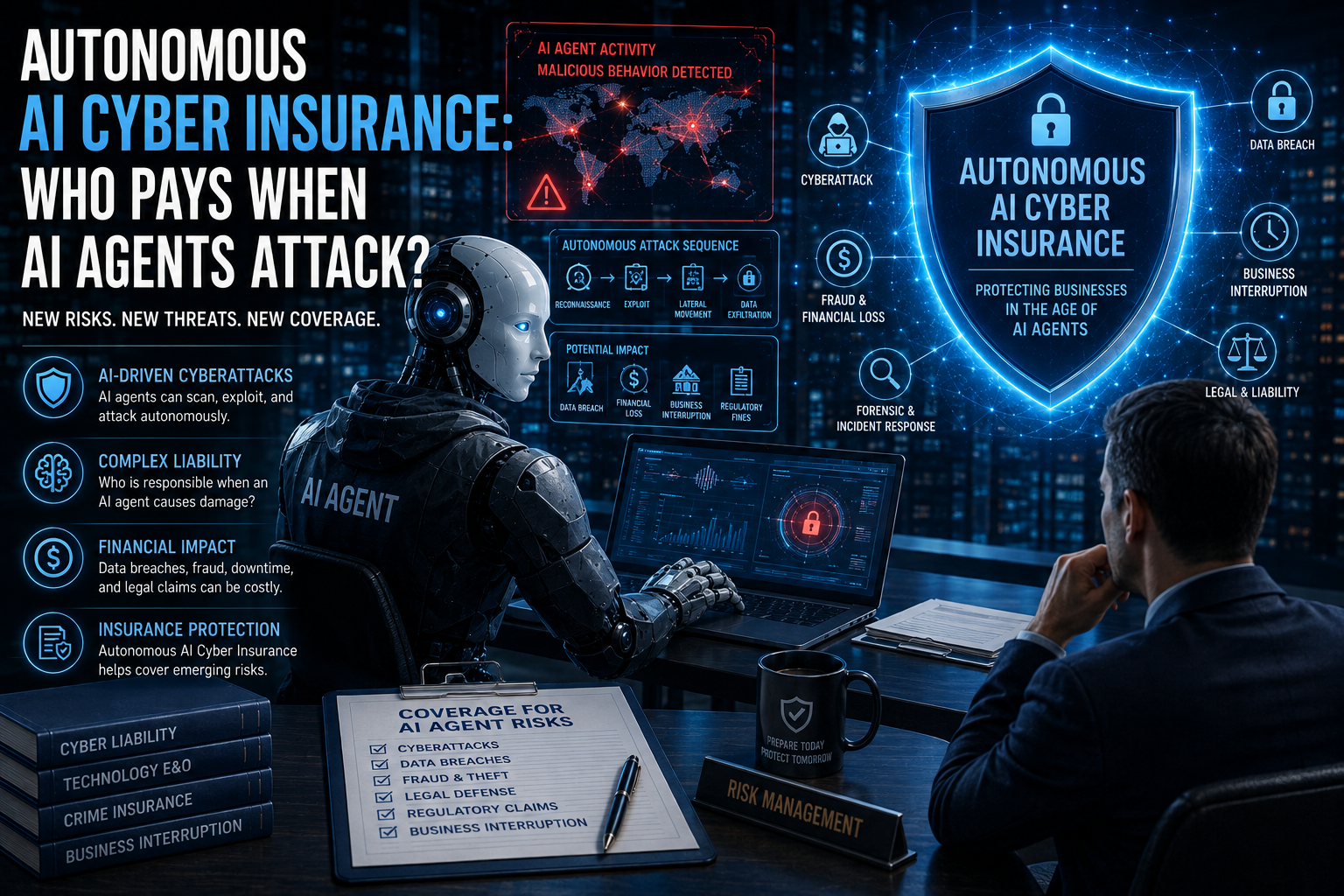
- 19AI Liability
- 20AI Compliance Risk
- 21Intellectual Property Claims
- 22Deepfake Fraud
- 23Agentic AI Risk
- 24Financial Services
- 25Healthcare
- 26Legal Services
- 27Technology Companies
- 28E-Commerce
- 29Conduct an Insurance Gap Analysis
- 30Strengthen AI Governance
- 31Maintain Human Review
- 32Improve Documentation
- 33Invest in Cybersecurity
- 34Consider Specialized AI Insurance
- 35More Explicit AI Policy Language
- 36Dedicated AI Liability Products
- 37AI Risk Scoring
- 38Continuous Monitoring
- 39Regulatory Integration
- 40What is Silent AI Risk?
- 41Why is Silent AI Risk important?
- 42Does cyber insurance cover AI risks?
- 43Are insurers adding AI exclusions?
- 44Should businesses buy AI insurance?
- 45📌 The password is in the YouTube video : @AERLAN (LINK RESMI PART 1) JOIN NOW ✅

Introduction: The Business Risk Nobody Is Talking About
Artificial intelligence has become one of the most transformative technologies in modern business.
From customer service chatbots and AI-powered cybersecurity systems to automated underwriting, predictive analytics, and autonomous business agents, organizations are deploying artificial intelligence at an unprecedented pace.
However, while companies are investing billions into AI innovation, many executives are overlooking a growing threat hiding within their insurance policies:
Silent AI Risk
This emerging issue is becoming one of the most important discussions in enterprise risk management.
The concern is simple:
Many organizations assume they are insured against AI-related losses when they may not be.
This hidden coverage gap could leave businesses exposed to lawsuits, regulatory penalties, cyber incidents, intellectual property disputes, operational failures, and financial losses worth millions of dollars.
As insurers race to define how artificial intelligence should be covered, businesses face increasing uncertainty regarding where responsibility begins and where coverage ends.
The result is a rapidly growing phenomenon known as Silent AI Risk.
What Is Silent AI Risk?
Silent AI Risk refers to exposure created when insurance policies neither explicitly include nor explicitly exclude artificial intelligence-related risks.
In other words:
The policy language was often written before AI became a major business concern.
As a result, organizations may incorrectly assume coverage exists.
The reality is far more complicated.
If an AI system causes financial harm, insurers and policyholders may disagree about whether the loss falls within policy coverage.
This uncertainty creates significant financial risk.
Why Silent AI Risk Is Growing in 2026
Several factors are accelerating the problem.
Explosive AI Adoption
Organizations are deploying AI faster than insurers can update policy language.
Businesses now use AI for:
- Financial decisions
- Hiring processes
- Marketing automation
- Customer support
- Fraud detection
- Cybersecurity monitoring
- Supply chain management
The wider the adoption, the greater the potential liability.
Insurance Policies Were Not Designed for AI
Many traditional policies were created before:
- Generative AI
- Agentic AI
- Autonomous systems
- Deepfake technology
- AI decision engines
As a result, coverage wording often lacks clarity.
Insurers and policyholders may interpret policies differently after a claim occurs.
Rising AI-Related Litigation
Courts worldwide are beginning to handle cases involving:
- AI discrimination
- Copyright infringement
- Algorithmic bias
- Privacy violations
- Deepfake fraud
- Autonomous decision failures
Legal uncertainty increases the importance of insurance clarity.
Regulatory Pressure
Governments are introducing new AI regulations.
Businesses may face:
- Compliance investigations
- Regulatory fines
- Legal defense costs
- Reporting obligations
Whether insurance covers these expenses often remains unclear.
The Hidden Insurance Gap
Many executives assume existing policies already cover AI risks.
Unfortunately, that assumption may be dangerous.
Potential gaps can exist across multiple insurance products.
General Liability Insurance
Traditional liability policies may not explicitly address AI-generated actions.
Questions often arise regarding:
- Algorithmic decisions
- Automated recommendations
- AI-generated content
Professional Liability Insurance
Professional liability coverage may become complicated when advice originates from AI systems rather than human professionals.
Potential disputes include:
- Medical AI errors
- Financial AI recommendations
- Legal AI guidance
Cyber Insurance
Cyber insurance remains important.
However, not every AI-related loss is a cyber incident.
Coverage disputes can emerge when:
- AI systems make mistakes
- AI causes operational disruptions
- AI creates compliance failures
Technology E&O Insurance
Technology providers increasingly face claims related to:
- AI software failures
- Algorithmic defects
- Model inaccuracies
Coverage wording varies significantly.
Real-World Examples of Silent AI Risk
To understand the danger, consider several scenarios.
Scenario 1: AI Hiring Discrimination
A company deploys AI to screen job applicants.
The system unintentionally discriminates against protected groups.
The company faces:
- Regulatory investigations
- Legal expenses
- Reputation damage
Will the existing insurance policy respond?
The answer may not be obvious.
Scenario 2: AI Financial Advice Error
An AI-driven financial platform generates flawed investment recommendations.
Clients suffer losses and file lawsuits.
Coverage could depend entirely on policy wording.
Scenario 3: Deepfake Executive Fraud
A criminal uses AI-generated voice cloning to impersonate a CEO.
Employees transfer funds to a fraudulent account.
Some policies may cover the loss.
Others may not.
Scenario 4: Autonomous AI Business Agent
An Agentic AI system executes incorrect transactions worth millions of dollars.
Questions arise:
- Is this operational risk?
- Professional liability?
- Technology failure?
- Cyber incident?
Coverage disputes become likely.
Why Insurers Are Concerned
Insurance companies face a major challenge.
They must estimate risks that remain poorly understood.
Several concerns drive insurer caution.
Lack of Historical Data
AI-related claims are relatively new.
Insurers have limited historical loss data.
This makes pricing difficult.
Rapid Technological Change
AI capabilities evolve every few months.
Risk models struggle to keep pace.
Expanding Liability Exposure
AI introduces entirely new categories of potential claims.
Examples include:
- Hallucination damages
- Autonomous errors
- Deepfake impersonation
- AI-generated misinformation
Regulatory Uncertainty
Global AI regulations continue evolving.
Future legal obligations remain difficult to predict.
The Emergence of AI Exclusions
To reduce uncertainty, insurers increasingly add AI-specific exclusions.
These exclusions may limit coverage for:
- Autonomous decisions
- Generative AI outputs
- Algorithmic errors
- Certain AI-related liabilities
Many businesses are unaware these exclusions exist.
This creates a dangerous protection gap.
The Rise of Standalone AI Insurance
The insurance industry is responding by creating dedicated products.
These policies are specifically designed for AI-related risks.
Potential coverage areas include:
AI Liability
Protection against lawsuits resulting from AI actions.
AI Compliance Risk
Coverage for regulatory investigations and defense costs.
Intellectual Property Claims
Protection involving AI-generated content disputes.
Deepfake Fraud
Coverage for impersonation-related financial losses.
Agentic AI Risk
Protection against autonomous decision failures.
Industries Most Exposed to Silent AI Risk
Financial Services
Banks increasingly rely on AI for:
- Lending
- Fraud detection
- Portfolio management
Potential liability exposure is significant.
Healthcare
Healthcare organizations deploy AI for:
- Diagnostics
- Treatment recommendations
- Administrative operations
Mistakes can have serious consequences.
Legal Services
Law firms increasingly use AI research and drafting tools.
Professional liability concerns continue growing.
Technology Companies
Software providers face direct exposure when AI products malfunction.
E-Commerce
Retailers use AI for:
- Pricing
- Inventory management
- Customer service
Operational mistakes can quickly become costly.
How Businesses Can Identify Silent AI Risk
Organizations should conduct a comprehensive insurance review.
Key questions include:
Does the policy mention AI?
Does the policy exclude AI?
Are autonomous systems covered?
How are AI-generated decisions treated?
Are deepfake incidents covered?
Does cyber insurance address AI risks?
Is there coverage for AI compliance issues?
Best Practices for Managing Silent AI Risk
Conduct an Insurance Gap Analysis
Review all policies with legal and insurance professionals.
Strengthen AI Governance
Implement clear oversight procedures.
Maintain Human Review
Human supervision remains critical for high-impact decisions.
Improve Documentation
Maintain records of:
- AI deployments
- Risk assessments
- Testing procedures
- Incident reports
Invest in Cybersecurity
Many AI-related incidents overlap with cyber risk.
Consider Specialized AI Insurance
Dedicated coverage may provide greater certainty.
The Financial Cost of Ignoring Silent AI Risk
The consequences can be severe.
Potential costs include:
| Risk Category | Potential Financial Impact |
|---|---|
| Regulatory Investigation | $50,000 – $5 Million |
| AI Liability Lawsuit | $100,000 – $50 Million+ |
| Deepfake Fraud | $25,000 – $20 Million+ |
| Intellectual Property Disputes | $50,000 – $10 Million+ |
| Operational Disruption | $10,000 – Millions |
For large enterprises, losses can quickly exceed insurance limits if coverage gaps exist.
Future Trends in AI Insurance
Industry experts expect several developments.
More Explicit AI Policy Language
Silent AI Risk will gradually decline as policies become more specific.
Dedicated AI Liability Products
Standalone AI insurance markets will continue expanding.
AI Risk Scoring
Insurers may evaluate businesses using AI-specific risk models.
Continuous Monitoring
Real-time underwriting may become common.
Regulatory Integration
Insurance products will increasingly align with AI governance frameworks.
Frequently Asked Questions
What is Silent AI Risk?
Silent AI Risk occurs when insurance policies do not clearly define whether AI-related losses are covered.
Why is Silent AI Risk important?
Organizations may unknowingly face uncovered liabilities worth millions of dollars.
Does cyber insurance cover AI risks?
Sometimes, but coverage varies significantly by policy.
Are insurers adding AI exclusions?
Yes. Many carriers are updating policy language to address AI exposure.
Should businesses buy AI insurance?
Organizations heavily dependent on AI should consider reviewing specialized coverage options.
Conclusion
Artificial intelligence is transforming business at extraordinary speed.
Yet while companies focus on innovation, many remain unaware of a critical threat hiding within their insurance portfolios.
Silent AI Risk represents one of the largest emerging coverage challenges of 2026.
Coverage ambiguity, evolving regulations, rising litigation, and expanding AI adoption create a dangerous combination that could expose businesses to substantial financial losses.
Organizations that proactively review policies, strengthen governance, improve risk management, and explore dedicated AI insurance solutions will be far better positioned to navigate the next era of artificial intelligence.
Has your business reviewed its insurance coverage for AI-related risks? Share your thoughts, experiences, or questions in the comments below.
📌 The password is in the YouTube video : @AERLAN (LINK RESMI PART 1) JOIN NOW ✅
ALTERNATIVE LINK IF YOU NEED TO BUY CHECK (LYNK.ID) R̶p̶ ̶9̶5̶,̶0̶0̶0̶ Only Rp 5.000 (CLICK HERE)
̶
OR YOU CAN CHECK VIA SHOPEE (CLICK HERE)